
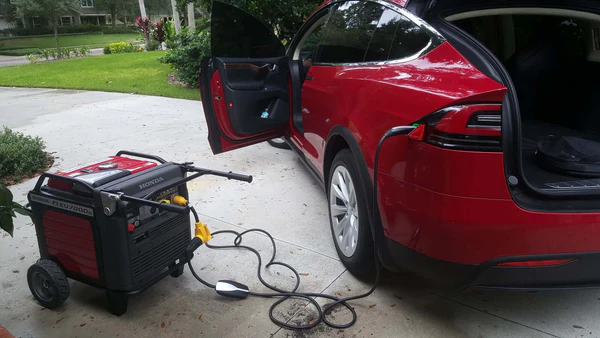
Yes — you can charge a Tesla with a generator, but it must meet specific electrical and safety requirements. Not every generator will work, and using the wrong type can damage equipment or fail to charge the vehicle at all.
Below is a clear breakdown of how it works, what you need, and the limitations to consider.
Read More:
- Are EV Charging Stations Profitable
- Can You Charge a Tesla in the Rain
- Tesla Battery Replacement Cost
- How To Use an EV Charger
- How To Install a Level 2 EV Charger at Home
- Can I Use My Dryer Outlet To Charge My EV
✔️ When Charging a Tesla With a Generator Works
To successfully charge a Tesla, the generator must:
1. Produce Clean, Stable Power (Inverter Generator)
Tesla’s onboard charger requires clean sine-wave electricity.
Inverter generators are best because they produce stable, low-distortion power similar to grid electricity.
2. Provide Enough Power
Your Tesla will only draw power if the generator can support the minimum charging requirements.
Typical Tesla Mobile Connector settings:
- 120V outlet → ~12 amps → ~1–3 miles of range per hour
- 240V outlet → 20–32 amps → 10–30 miles of range per hour
A generator supplying at least 2,000–3,000 watts for 120V or 5,000+ watts for 240V is usually required for usable charging speeds.
3. Be Properly Grounded
Many generators do not have a bonded neutral, which causes the Tesla to reject the charge.
Solutions:
- Use a neutral–ground bonding plug
- Choose a generator with a factory-bonded neutral
4. Use the Correct Adapters
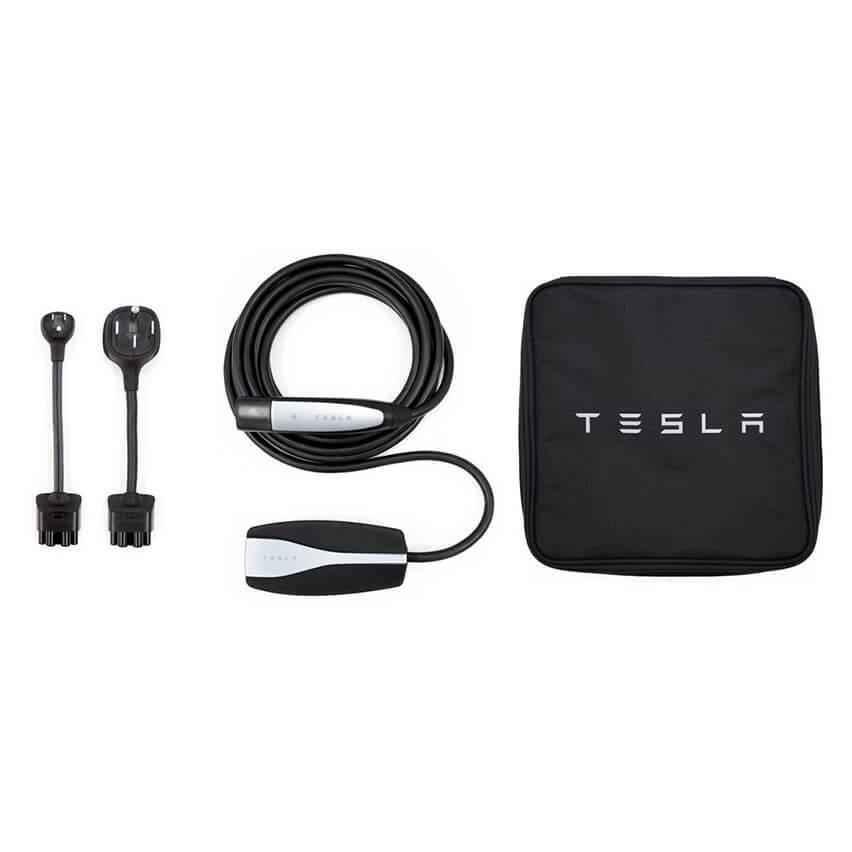
Tesla Mobile Connector supports various plug types, but adapters must match BOTH the generator and the Tesla charging equipment.
Never force or “hack” a connection.
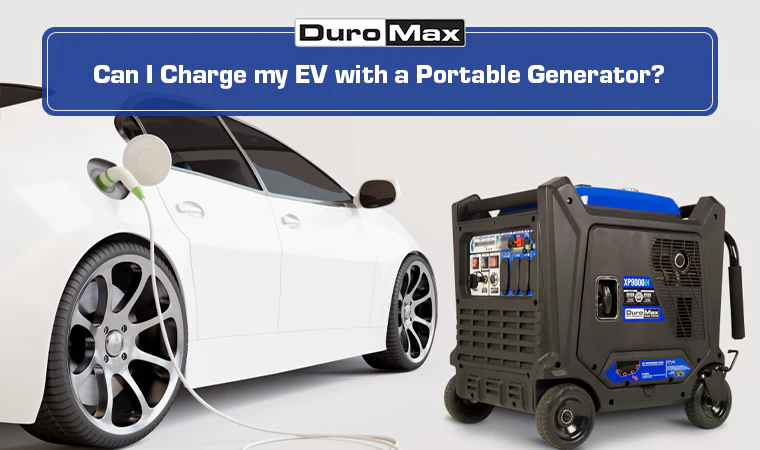
⚠️ When Charging With a Generator Is Not Recommended
Charging with a generator isn’t ideal for everyday use. Avoid it when:
- Long-term charging is needed (fuel inefficiency + wear).
- Your generator cannot maintain a stable voltage or frequency.
- You rely on it as your only charging method.
- The generator is undersized, which may cause overload shutoff.
Also note: Supercharging and Level 2 wall chargers cannot be powered by a generator. Only the Mobile Connector or a compatible portable EVSE should be used.
🎯 Best Situations For Using a Generator to Charge a Tesla
- Emergency backup during a power outage
- Remote camping or off-grid travel
- Maintaining a minimal range to reach a charging station
For regular home backup, a home battery system (e.g., Tesla Powerwall) is far more efficient and silent.
- How To Invest In EV Charging Stations
- How To Become a Certified EV Charger Installer
- How Long Do Tesla Batteries Last
- How Long Does It Take to Charge a Tesla
- How Much Does It Cost to Charge a Tesla
🔌 How Much Range Can You Expect?
Charging speed varies with generator output:
| Generator Output | Voltage | Estimated Charging Rate |
|---|---|---|
| 2000W inverter | 120V | 1–3 miles/hour |
| 5000W generator | 240V | 8–15 miles/hour |
| 7000W+ generator | 240V | 15–30 miles/hour |
These rates are approximate since weather, battery temperature, and generator load can affect performance.
🛠️ Step-by-Step: How to Charge a Tesla With a Generator
- Start the generator and let it stabilize for 2–3 minutes.
- Plug in a neutral-ground bonding adapter (if required).
- Connect the Tesla Mobile Connector to the generator outlet using the correct adapter.
- Set a low charging current in the Tesla screen or app (10–12A to start).
- Verify charging starts — look for the green pulsing light.
- Gradually increase amperage if the generator can support a higher load.
👍 Pros & 👎 Cons
Pros
- Works during emergencies
- Portable backup solution
- Enables off-grid travel
- Much cheaper than full backup systems
Cons
- Slow charging
- Requires fuel and maintenance
- Can be noisy
- Must monitor load and grounding
- Less efficient than grid power
FAQ: Charging a Tesla With a Generator
1. Is it Safe to Charge a Tesla with a Generator?
Yes — if the generator provides clean power, proper grounding, and enough wattage. Using the wrong equipment can be unsafe.
2. Will Any Generator Work?
No. Only inverter generators or stable generators with a clean sine-wave output should be used. Cheap generators often fail to charge a Tesla.
3. Can I Use a 120V Generator?
Yes, but charging will be very slow (1–3 miles per hour). It’s useful only in emergencies.
4. Do I Need a Grounding Plug?
Most portable generators require a neutral-ground bonding plug to allow the Tesla to detect proper grounding.
5. Can I Supercharge From a Generator?
No. Superchargers require extremely high and stable power that portable generators cannot provide.
6. How Big of a Generator Do I Need?
For practical charging:
- Minimum: 2,000W (very slow, 120V)
- Better: 5,000W+ (240V charging)
- Ideal: 7,000W+ for faster 240V charging
7. Will Charging Damage My Tesla Battery?
No — Tesla’s onboard charger regulates input power. The generator just supplies electricity.
8. Can I Use a Generator For Daily Charging?
No. It’s impractical, expensive, noisy, and inefficient. Use it only for backup or occasional off-grid use.
9. Can a Solar Generator Charge a Tesla?
Yes, but most portable solar generators provide slow charging similar to a 120V outlet unless they offer a high-wattage 240V output.
10. Is This Allowed By Tesla?
Tesla does not forbid generator charging but expects users to ensure proper grounding and electrical safety. Any damage from improper equipment may not be covered under warranty.
Conclusion
You can charge a Tesla with a generator, but it requires the right equipment and should be reserved for emergencies or remote situations. A high-quality inverter generator, proper ground bonding, and the correct Tesla charging adapters are essential.
If used safely, a generator can provide enough power to keep you moving until you reach a proper charging station.